


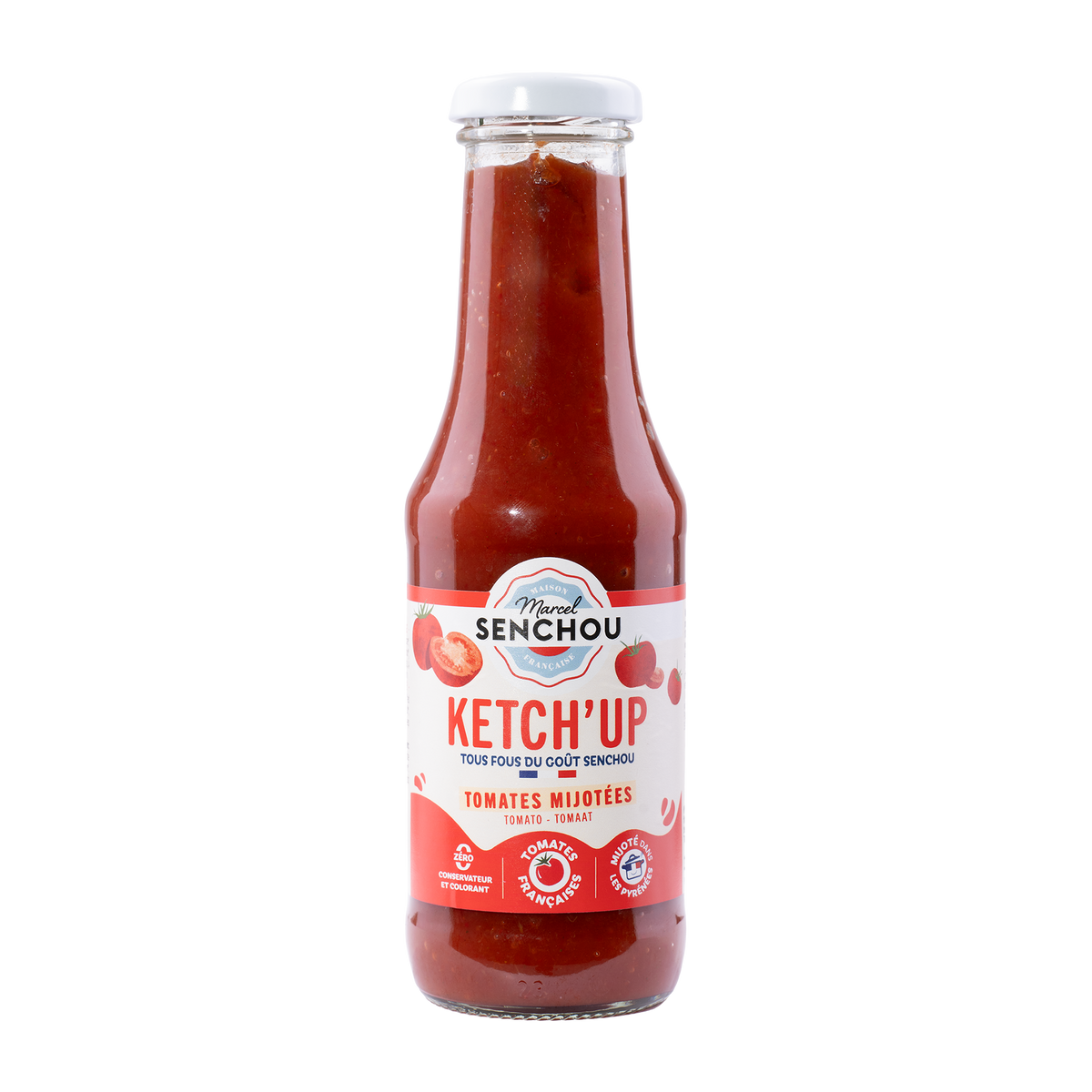
Ketchup aus französischen Tomaten
Französisch, Tomatenketchup, mild, ohne Verdickungsmittel
Couldn't load pickup availability


- Excellent Ratings
From 250,000 happy customers - Fast Customer Service
by phone, email, or chat - Family-owned since 2002.
genussland.de: where good taste lives.
Shipping & Delivery
Your order will reach you in just 1–2 days for as little as €5.45 with DHL, DPD, or UPS. Shipping is free for orders over €99. Need it faster? Choose from our express shipping options.

Payment and Installment Plan
Your payment information is always processed securely. Choose from many payment methods such as PayPal, Klarna, Apple Pay, Mastercard or Visa and benefit from purchase on account and payment by installments. You can find more information in our Payment Terms.
Ketchup aus französischen Tomaten von Senchou. Zur Hälfte Tomate, im offenen Kessel eingekocht.
Ketchup aus französischen Tomaten ist die milde Variante der Compagnie des Pyrénées. Die Tomate stellt die Hälfte der Rezeptur, eingekocht statt aus Konzentrat angerührt. Kein Chili, kein Verdickungsmittel.
Ketchup ist eine gewürzte Tomatenzubereitung, die ihre Bindung durch Einkochen bekommt. Wie sie schmeckt, entscheidet sich vor allem daran, in welcher Form die Tomate in den Kessel kommt.
Der Industriestandard arbeitet mit Tomatenmark. Das Konzentrat wird mit Wasser wieder gestreckt, dann gewürzt und gebunden. Das geht schnell und bleibt über das ganze Jahr gleich.
Hier läuft es umgekehrt. Ganze Tomaten kommen in offene Kessel und bleiben dort, bis das Wasser verdampft ist. „Mijotées“ nennen die Franzosen das: geköchelt, nicht gekocht.
Die 50 Prozent Tomate sind dabei die aussagekräftigere Zahl. Sie beziehen sich auf frische Frucht, nicht auf Mark. Bei Konzentrat steht eine ähnliche Prozentangabe für eine deutlich kleinere Menge tatsächlicher Tomate.
Warum er dünner fließt, als Sie es gewohnt sind
Der erste Unterschied zeigt sich beim Ausgießen. Diese Sauce läuft, statt in einem Batzen aus der Flasche zu fallen.
Handelsübliche Ketchups enthalten meist ein Bindemittel, oft modifizierte Stärke oder Guarkernmehl. Es macht die Sauce standfest, damit sie auf der Pommes liegen bleibt.
Ohne diesen Zusatz trägt allein die eingekochte Frucht die Textur. Das Ergebnis ist eine Sauce mit sichtbaren Fruchtanteilen, die sich auf dem Teller etwas ausbreitet. Wer einen standfesten Ketchup erwartet, der am Pommesstäbchen kleben bleibt, wird sie als zu flüssig empfinden.
Die Bindung, die trotzdem da ist, stammt aus der Frucht selbst. Tomaten enthalten Pektin, das beim langen Einkochen frei wird und andickt. Es bindet weicher als Stärke und fällt am Gaumen nicht auf.
Gut zu wissen: Stellen Sie die Flasche vor dem Ausgießen kurz aufrecht und schütteln Sie sie. Ohne Stabilisator setzt sich ein Teil der Flüssigkeit oben ab. Das ist normal und kein Fehler im Glas.
Ein zweiter Punkt betrifft die Dosierung. Weil die Sauce dünner läuft, verteilt sich schnell mehr auf dem Teller, als gewollt war. Ein kleiner Klecks reicht hier weiter als bei einer standfesten Variante.
Mild, fruchtig und ohne jede Schärfe
Im Glas ein dunkles, sattes Rot mit mattem Glanz. Am Gaumen kommt zuerst die Tomate, dann eine ruhige Säure, zuletzt ein zurückhaltender Würzton aus Paprika und Zwiebel.
Süße und Säure stehen im Gleichgewicht. Keine der beiden drängt sich vor, wie es bei stark essigbetonten Saucen geschieht.
Schärfe fehlt vollständig. Das ist Absicht und macht ihn für den Kinderteller brauchbar, kostet aber Spannung. Wer Würze und etwas Feuer sucht, greift besser zum Ketchup mit Piment d'Espelette aus demselben Haus.
Ein zuckerreduzierter Ketchup ist er ebenfalls nicht. Die Süße gehört zur klassischen Rezeptur und fängt die Säure der Tomate ab.
Die Temperatur macht mehr aus, als man annimmt. Direkt aus dem Kühlschrank wirkt die Frucht flach und die Säure vorne. Zehn Minuten bei Raumtemperatur, und das Tomatenaroma kommt zurück.
Lagern Sie das Glas nach dem Öffnen kühl und dunkel, damit die frische Note erhalten bleibt. Licht und Wärme kosten hier zuerst das Aroma, lange bevor sich am Aussehen etwas ändert.
Wozu er passt — und wozu nicht
Die klassischen Einsätze bleiben die besten: Pommes frites, Bratwurst, Burger, Frikadellen, Rührei. Dort erledigt er seine Arbeit ohne Aufhebens.
Interessanter wird er, wo Ketchup sonst als Abkürzung dient. Zwei Esslöffel in einer Bolognese bringen Fruchtsäure und Süße auf einmal mit. In einer schnellen Currysauce ersetzt er Tomatenmark plus Zucker.
Unser Tipp: Rühren Sie für eine Currysauce drei Esslöffel mit einem Teelöffel Currypulver und einem Schuss Brühe glatt. Nur erwärmen, nicht kochen. Über 70 °C verliert die Tomate ihre frische Note.
Als Grundlage für eine Grillsauce funktioniert er ebenso. Weil er selbst keine Schärfe mitbringt, bestimmen Sie Richtung und Stärke vollständig selbst.
Für Marinaden, die lange auf dem Rost liegen, taugt er weniger. Der Zuckeranteil karamellisiert früh und wird bitter, bevor das Fleisch durch ist. Streichen Sie ihn deshalb erst gegen Ende auf.
In der kalten Küche ist er ebenfalls brauchbar. Mit Mayonnaise und einem Spritzer Zitrone entsteht in einer Minute eine Cocktailsauce zu Garnelen oder hartgekochtem Ei.
Wer Kinder am Tisch hat, kennt das andere Argument. Ohne Schärfe und ohne Pfefferspitze wird er auch von denen genommen, die sonst jede Sauce vom Teller schieben.
Eingekocht in der Ariège am Fuß der Pyrenäen
Hinter der Marke Senchou steht die Compagnie des Pyrénées in der Ariège, im Südwesten Frankreichs. Der Betrieb kocht dort seit über 25 Jahren Saucen und Gemüsezubereitungen ein.
Die offene Kesselführung erklärt den Aufwand. Wasser verdampft, das Aroma bleibt zurück. Nur dauert das deutlich länger als das Anrühren aus Konzentrat.
Auf dem Etikett steht im Original Senchou Pur Ketch'up Tomates Mijotées. Der Name benennt genau das Verfahren, das den Unterschied ausmacht.
Die Ariège ist Bergland, kein Tomatenanbaugebiet. Die Frucht kommt aus dem sonnigeren Süden des Landes, verarbeitet wird sie am Fuß der Pyrenäen. Diese Trennung ist in Frankreich üblich und kein Widerspruch.
Das übrige Sortiment des Hauses folgt derselben Linie: eingekochte Gemüsezubereitungen mit kurzer Rezeptur. Die Ketchups sind davon der bekannteste Teil, und sie unterscheiden sich untereinander vor allem über die Würzung.
Ein Detail am Rande: Die Flasche besteht zu 82 Prozent aus Recyclingglas. Für eine Sauce, die auf dem Tisch stehen bleibt, ist Glas ohnehin die angenehmere Wahl gegenüber der Quetschflasche.
Ein Ketchup, der nach Tomate schmeckt statt nach Ketchup.
Compagnie des Pyrenees
Compagnie des Pyrenees
Nutritional Information
Nutritional Information
Alcohol content
Alcohol content
Ingredients
Ingredients
Distributor
Distributor
Legal guarantee
Legal guarantee

How it all began
Does this sound familiar? You return from vacation with a bottle of olive oil from Portugal in your suitcase, a jar of fruit spread from South Tyrol, perhaps a bar of chocolate from a small factory in France — and you ask yourself: Why can't I find something like this easily at home? We kept asking ourselves this question.
We are Kerstin and Stephan Uhlenbusch from Nordhorn, a city on the German-Dutch border. On our travels through Europe, we made the most wonderful culinary discoveries: mountain apple juices from the high altitudes of South Tyrol, Breton barrel butter, handmade pasta from Italy, French sea salt. It wasn't the big luxury products that fascinated us, but rather the honest, artisan-made foods from people who put their heart and soul into their products.
In 2002, we decided to turn this passion into our profession: to make good food accessible to everyone who cannot travel to the producers themselves. This is how our gourmet shipping business came into being — initially as a store in Nordhorn, soon after as one of the first gourmet online shops in Germany. Back then under the name nur Gutes (only good things) — today we continue it as genussland.de. The ambition has remained the same: this is where good taste resides.
Who we are
What drives us is the same curiosity with which we started in 2002: finding out who truly makes good food. Over more than two decades, we have built a network — with producers, traders, restaurateurs, and culinary artisans from all over Europe.
Kerstin was the managing director of the association of leading delicatessen merchants in Germany — the industry association of the country's best owner-managed delicatessen stores. In this role, she not only accompanied but actively shaped the German delicatessen industry. With the deli Festival, we also launched our own B2B trade fair for delicacies, which brought together producers, traders, and restaurateurs from all over Europe. The festival no longer exists today — but the relationships that arose from it still accompany us.
What does this mean for you? We know our industry like almost no one else. Chambers of commerce and economic development agencies from all over Europe repeatedly introduce us to exciting producers who want to offer their products on the German market. This way, genussland always offers something you won't find in any supermarket and hardly in any other shop.
What you'll find here
Our assortment includes fine foods, delicacies, wines, non-alcoholic beverages, and selected kitchen and home accessories — from manufacturers in Germany, Austria, Italy, France, Portugal, Spain, England, Iceland, Denmark, Sweden, Greece, and the USA.
An extra virgin olive oil from Portugal, a genuine Aceto Balsamico from Modena, Fleur de Sel from the Breton coast, hand-mixed spice blends. Fruit spreads, aromatic honey, truffle delicacies, chutneys, and mustard sauces. Vintage sardines and fine canned fish, risotto rice, and handmade pasta — basic ingredients for honest cooking and specialties for special moments.
Our fresh delivery service brings the legendary Beurre Bordier from Brittany, Italian Burrata, and fine salami to your home — securely packaged and continuously chilled.
Wine is particularly close to our hearts: white wine from Rheinhessen and the Pfalz, red wine from Austria and Burgenland, rosé for barbecue season, natural wine for the adventurous, sparkling wine and champagne for special moments. Not from all over the world — but from winemakers we have personally visited and whose work we appreciate. Many of them work organically or biodynamically.
Our Philosophy
What makes a product a genussland product? We ask ourselves this question for every single item we add to our range. The answer is never one-dimensional – it's the combination of craftsmanship, origin, ingredients, and the people behind them.
We ask many questions before a product finds its way into our shop. How is it made? Where do the raw materials come from? What philosophy does the manufacturer pursue? We quickly notice whether we are hearing marketing clichés or if a producer is happy to explain their journey. It is precisely this enthusiasm that we seek – and repeatedly find.
Craftsmanship. We prefer products from small manufactories and family businesses that often produce their culinary treasures by hand for generations. The careful processing and artisanal skill can be tasted in every bite.
Best Ingredients. For us, good quality begins with the raw materials. Whether it's fruit, vegetables, milk, meat, or grain – we ensure that our manufacturers rely on first-class, as natural as possible, ingredients. Many of our producers are organically certified; our shop itself is organically controlled under the number DE-ÖKO-037.
Origin and Regionality. We appreciate products with a clear regional identity. A South Tyrolean mountain apple juice made from slowly ripened, old apple varieties. A Portuguese olive oil from trees that have shaped the landscape for centuries. These stories of origin make delicacies what they are.
Personal relationship with the manufacturer. We have known many of our suppliers personally for years, some for over two decades. We visit them, taste together, and exchange ideas. This proximity guarantees transparency and trust.
At the end of the day, it has to taste good. We try all products ourselves – not just once, but again and again while cooking, at the table, on the plate. Only what convinces us personally finds its way into the shop.
The people behind the products
What brings us the most joy: We get to accompany passionate individuals on their journey. People whose drive it is to make a good product even better. Some have been with us since our founding - for over twenty years.
There's the South Tyrolean fruit farmer who presses mountain apple juice from old, slowly ripened apple varieties, unlike anything else. The Italian balsamic family who ages their vinegar in Modena for decades. The Breton butter manufactory whose hand-churned butter is on the menu of the best restaurants in Europe. The Danish licorice pioneer who reinvented a centuries-old specialty.
Behind every product in our shop stands a person, a family, a story. And it is precisely these stories that make the difference between an interchangeable food item and a true delicacy.
This is where good taste resides
Whether you want to order fine foods online, are looking for a special wine, want to put together a gift for a loved one, or simply want to enrich your kitchen with high-quality ingredients — genussland is the right place for you.
Browse through our assortment, get inspired, and conveniently order your favorite products to your home. Read more about our approach on the Sustainability and Responsibility page. Do you have a question? We look forward to your message to our Customer Service.
Welcome to genussland.
Kerstin and Stephan Uhlenbusch

-
 NewVendor:Compagnie des Pyrenees
Ketchup aus französischen Tomaten
Französisch, Tomatenketchup, mild, ohne Verdickungsmittel
5 in stockRegular price 5,90€Sale price 5,90€ Regular priceUnit price 16,39€ per kg -
 NewVendor:Compagnie des Pyrenees
Ketchup with Piment d'Espelette
French, Tomato Ketchup, with Chili
13 in stockRegular price 5,90€Sale price 5,90€ Regular priceUnit price 16,39€ per kg


