


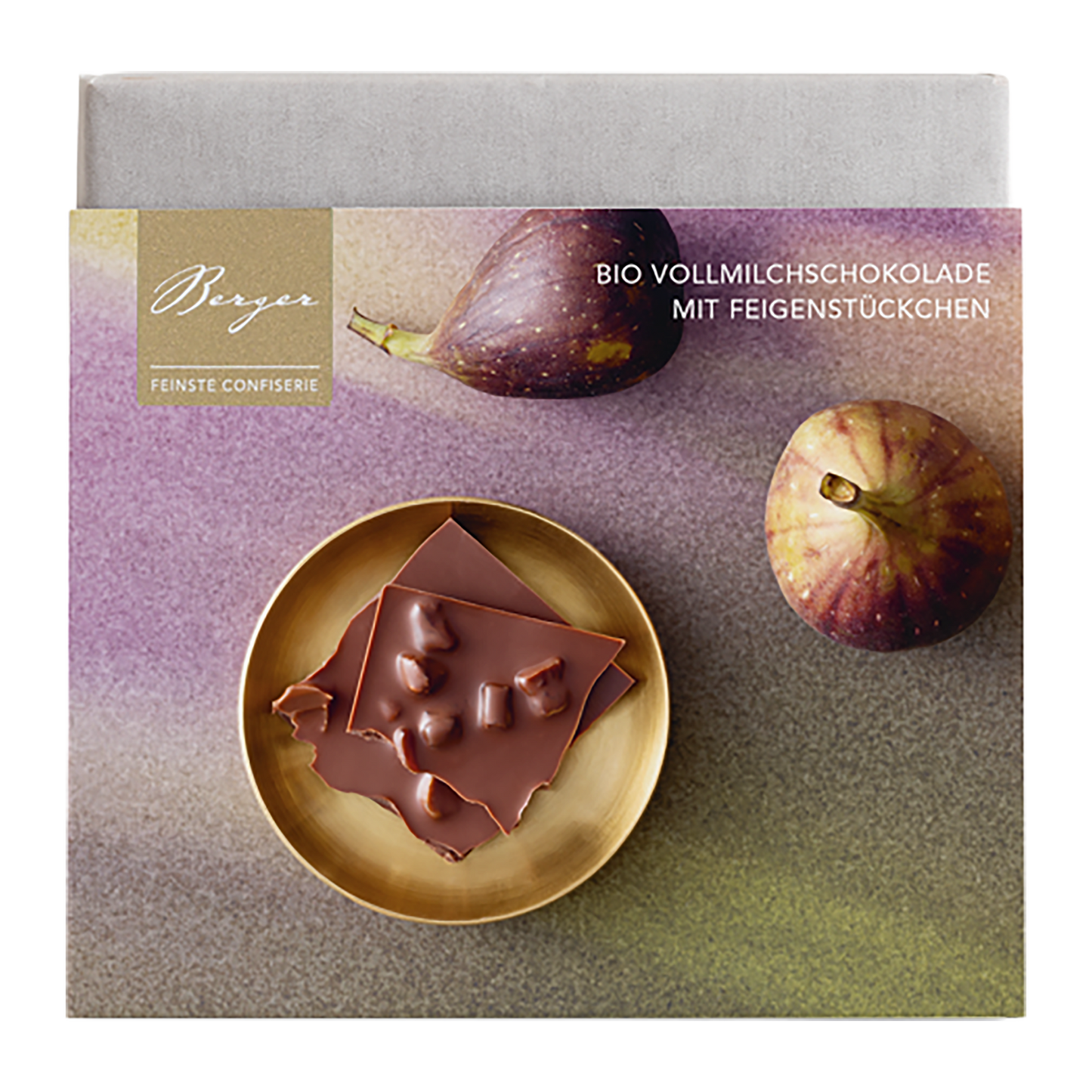
Bio Vollmilchschokolade mit Feigenstückchen
Vollmilchschokolade mit weichen Feigenstücken, 37 % Kakao, aus Lofer
Couldn't load pickup availability


- Excellent Ratings
From 250,000 happy customers - Fast Customer Service
by phone, email, or chat - Family-owned since 2002.
genussland.de: where good taste lives.
Shipping & Delivery
Your order will reach you in just 1–2 days for as little as €5.45 with DHL, DPD, or UPS. Shipping is free for orders over €99. Need it faster? Choose from our express shipping options.

Payment and Installment Plan
Your payment information is always processed securely. Choose from many payment methods such as PayPal, Klarna, Apple Pay, Mastercard or Visa and benefit from purchase on account and payment by installments. You can find more information in our Payment Terms.
Bio Vollmilchschokolade mit Feigenstückchen. Weiche Frucht, milder Schmelz, 37 Prozent Kakao.
Bio Vollmilchschokolade mit Feigenstückchen ist eine Tafel von Berger Confiserie aus Lofer, in der weiche Stücke getrockneter Feige in Vollmilchschokolade eingebettet sind. Keine Füllung, kein Knuspereinsatz, keine Fruchtcreme, sondern ganze Fruchtstücke in der Masse.
Bio Vollmilchschokolade mit Feigenstückchen ist eine Vollmilchschokolade mit 37 Prozent Kakao von Berger Confiserie, in die fast 16 Prozent getrocknete Feige eingearbeitet sind. Trockenfrucht in Schokolade ist oft ein Ärgernis: hart, zäh, mit Stücken, die sich zwischen die Zähne setzen. Bei dieser Tafel bleiben die Feigen weich, weil sie vor dem Einrühren gehackt und mit Reismehl bestäubt werden, damit sie sich nicht verklumpen. Beim Abbrechen zeigen sich die Fruchtstücke als dunkle Inseln in heller Milchschokolade, und beim Kauen treffen milder Schmelz und honigartige Frucht in jedem Stück aufeinander.
Honig, Karamell und die kleinen Kerne der Feige
Die Feige schmeckt in dieser Tafel nach Honig, reifer Trockenfrucht und einem Hauch Karamell, die Vollmilch liegt mild darunter. Die Kombination ist süß, das lässt sich nicht wegdiskutieren. Feige und Vollmilch ziehen an einem Strang, beide rund, beide weich, beide ohne Säure. Im Mund entsteht daraus eine Abfolge: erst der Schmelz der Schokolade, dann die zähe, saftige Frucht, zuletzt ein Nachklang, der eher an Feige als an Kakao erinnert.
Was die Tafel vor dem Eintönigen bewahrt, sind die Kerne. Getrocknete Feigen bringen hunderte winzige Samen mit, die beim Kauen leise knacken und der weichen Masse eine feine Körnigkeit geben. Dazu kommt der leicht erdige Ton, den nur die Feige hat, irgendwo zwischen Dattel und Rosine, aber weniger süß als beide.
Wer Frucht in Schokolade als Kontrast erwartet, also Säure gegen Süße, wird die Feige als zu sanft empfinden. Dafür gibt es die Himbeere. Wer Zartbitter bevorzugt, findet in 37 Prozent Kakao zu wenig Bitterkeit, um der Fruchtsüße etwas entgegenzusetzen. Und wer knusprige Einlagen mag, wird die weichen, leicht klebrigen Stücke als zu nachgiebig empfinden. Diese Tafel ist für Vollmilchfreunde gemacht, die es warm und weich mögen.
Zu Schwarztee, Walnüssen und einem Glas Amarone
Die Tafel schmeckt bei Zimmertemperatur besser als aus dem Kühlschrank, weil die Feigenstücke erst dann weich genug sind, um mit der Milchschokolade zu verschmelzen. Kalt bleiben sie fest und trennen sich beim Kauen von der Masse. Lassen Sie die Tafel eine halbe Stunde liegen, bevor Sie sie öffnen, und brechen Sie die Rippen quer, damit die Fruchtstücke nicht an der Bruchkante herausfallen.
Zu einer Kanne kräftigem Schwarztee, etwa einem Assam, passt sie an einem langen Nachmittag besser als jedes Gebäck: Die Tannine des Tees nehmen der Frucht die Schwere. Am Abend ergänzt ein Glas Amarone oder ein Vin Santo die Feige um Rosine und Holz. Wer ein Dessert daraus machen will, hackt zwei Rippen grob, mischt sie mit einer Handvoll gerösteter Walnüsse und streut beides über griechischen Joghurt mit einem Löffel Feigenkonfitüre. Zu einem Stück reifem Bergkäse ersetzt ein Rippchen das Feigensenf-Töpfchen. Und wer Müsli selbst mischt, hackt eine Rippe fein und gibt sie mit Haferflocken und Nüssen in die Schüssel, die Feige übernimmt dabei die Rolle der Rosine.
Aus Erfahrung: Lagern Sie die Tafel nicht neben Kaffee, Gewürzen oder Käse. Die Feigenstücke nehmen Fremdgerüche schneller auf als reine Schokolade, und im Sommer gehört die Tafel nicht in den Rucksack. Ab 24 Grad wird die Vollmilch weich und die Frucht klebrig. Zum Schmelzen für Glasuren ist die Tafel nicht geeignet, weil die Fruchtstücke in der flüssigen Masse zu Boden sinken und sich nicht sauber verteilen lassen.
Sechzig Stunden in der Conche, dann erst die Frucht
Berger Confiserie wurde 1994 von Hubert und Christine Berger in einer Garage in Lofer gegründet, wo heute mehr als hundert Menschen arbeiten. Das Haus bringt sechsmal im Jahr eine neue Kollektion heraus, und die Feigentafel ist die Fruchtsorte der Herbstkollektion 2026, die neben dem Jahressortiment steht. Solche Saisonsorten sind bei Berger die Spielwiese der Werkstatt: Was sich bewährt, wandert später ins feste Programm, was nicht, verschwindet nach einer Saison wieder.
Getrocknete Feigen entstehen, indem die reifen Früchte am Baum oder auf Horden in der Sonne den Großteil ihres Wassers verlieren. Dabei konzentriert sich der Fruchtzucker, und die Feige bekommt ihren honigartigen, leicht karamelligen Ton, den die frische Frucht nicht hat. Für Schokolade ist das ein Vorteil, denn frische Feigen wären zu wasserreich und würden die Masse verderben. Getrocknet halten sie sich in der Tafel monatelang, ohne dass die Schokolade Feuchtigkeit zieht.
Die Vollmilchmasse entsteht aus Kakao der Kooperative CONACADO in der Dominikanischen Republik, mit der Berger seit vielen Jahren zusammenarbeitet. In Lofer wird die Masse über sechzig Stunden conchiert, also unter Wärme gerührt und belüftet, bis Säuren und Bitterstoffe entwichen sind und der Schmelz seidig wird. Viele Industriemassen verlassen die Conche nach wenigen Stunden. Die Geduld schmeckt man dort, wo Milch und Feige ineinander übergehen, ohne dass ein sandiger Rest auf der Zunge bleibt.
Die Feigenstücke kommen erst nach dem Conchieren in die abgekühlte Masse, sonst würden sie in der Wärme zergehen und die Schokolade grau färben. Das Reismehl im Rezept hat einen praktischen Grund: Es trennt die klebrigen Stücke voneinander, damit sie sich gleichmäßig verteilen, statt als Klumpen an einer Stelle der Form zu landen. Ein kleines Detail, das entscheidet, ob jedes Rippchen Frucht enthält oder nur jedes dritte.
Die Herbstfrucht unter den Berger-Sorten
Feige ist im Schokoladenregal selten, weil sie sich schwerer verarbeiten lässt als Himbeere oder Orange. Die Frucht ist klebrig, feucht und verliert bei falscher Lagerung schnell ihre Form. Dass Berger sie trotzdem in eine Tafel bringt, spricht für die Werkstatt in Lofer. Das Ergebnis ist eine Vollmilchschokolade, die eher nach Kaminfeuer als nach Sommerwiese klingt, und eine der wenigen Tafeln, in denen die Frucht als ganzes Stück und nicht als Pulver oder Creme vorkommt.
Als Mitbringsel zum Abendessen passt sie besser als eine pure Tafel, weil sie ein Gesprächsthema mitbringt. Im Geschenkkarton neben Nüssen, Trockenfrüchten und einem Bergkäse fügt sie sich wie selbstverständlich ein. Wer die Reihe kennenlernen möchte, kombiniert sie mit der Vollmilch mit Himbeerstückchen als heller, säuerlicher Gegenspielerin oder mit der puren Vollmilchschokolade, um den Kakao unverstellt zu schmecken.
Eine Tafel für die Wochen, in denen das Obst im Garten getrocknet und der Tee wieder heißer getrunken wird.
Berger Schokolade
Berger Schokolade
Nutritional Information
Nutritional Information
Alcohol content
Alcohol content
Ingredients
Ingredients
Distributor
Distributor
Legal guarantee
Legal guarantee

How it all began
Does this sound familiar? You return from vacation with a bottle of olive oil from Portugal in your suitcase, a jar of fruit spread from South Tyrol, perhaps a bar of chocolate from a small factory in France — and you ask yourself: Why can't I find something like this easily at home? We kept asking ourselves this question.
We are Kerstin and Stephan Uhlenbusch from Nordhorn, a city on the German-Dutch border. On our travels through Europe, we made the most wonderful culinary discoveries: mountain apple juices from the high altitudes of South Tyrol, Breton barrel butter, handmade pasta from Italy, French sea salt. It wasn't the big luxury products that fascinated us, but rather the honest, artisan-made foods from people who put their heart and soul into their products.
In 2002, we decided to turn this passion into our profession: to make good food accessible to everyone who cannot travel to the producers themselves. This is how our gourmet shipping business came into being — initially as a store in Nordhorn, soon after as one of the first gourmet online shops in Germany. Back then under the name nur Gutes (only good things) — today we continue it as genussland.de. The ambition has remained the same: this is where good taste resides.
Who we are
What drives us is the same curiosity with which we started in 2002: finding out who truly makes good food. Over more than two decades, we have built a network — with producers, traders, restaurateurs, and culinary artisans from all over Europe.
Kerstin was the managing director of the association of leading delicatessen merchants in Germany — the industry association of the country's best owner-managed delicatessen stores. In this role, she not only accompanied but actively shaped the German delicatessen industry. With the deli Festival, we also launched our own B2B trade fair for delicacies, which brought together producers, traders, and restaurateurs from all over Europe. The festival no longer exists today — but the relationships that arose from it still accompany us.
What does this mean for you? We know our industry like almost no one else. Chambers of commerce and economic development agencies from all over Europe repeatedly introduce us to exciting producers who want to offer their products on the German market. This way, genussland always offers something you won't find in any supermarket and hardly in any other shop.
What you'll find here
Our assortment includes fine foods, delicacies, wines, non-alcoholic beverages, and selected kitchen and home accessories — from manufacturers in Germany, Austria, Italy, France, Portugal, Spain, England, Iceland, Denmark, Sweden, Greece, and the USA.
An extra virgin olive oil from Portugal, a genuine Aceto Balsamico from Modena, Fleur de Sel from the Breton coast, hand-mixed spice blends. Fruit spreads, aromatic honey, truffle delicacies, chutneys, and mustard sauces. Vintage sardines and fine canned fish, risotto rice, and handmade pasta — basic ingredients for honest cooking and specialties for special moments.
Our fresh delivery service brings the legendary Beurre Bordier from Brittany, Italian Burrata, and fine salami to your home — securely packaged and continuously chilled.
Wine is particularly close to our hearts: white wine from Rheinhessen and the Pfalz, red wine from Austria and Burgenland, rosé for barbecue season, natural wine for the adventurous, sparkling wine and champagne for special moments. Not from all over the world — but from winemakers we have personally visited and whose work we appreciate. Many of them work organically or biodynamically.
Our Philosophy
What makes a product a genussland product? We ask ourselves this question for every single item we add to our range. The answer is never one-dimensional – it's the combination of craftsmanship, origin, ingredients, and the people behind them.
We ask many questions before a product finds its way into our shop. How is it made? Where do the raw materials come from? What philosophy does the manufacturer pursue? We quickly notice whether we are hearing marketing clichés or if a producer is happy to explain their journey. It is precisely this enthusiasm that we seek – and repeatedly find.
Craftsmanship. We prefer products from small manufactories and family businesses that often produce their culinary treasures by hand for generations. The careful processing and artisanal skill can be tasted in every bite.
Best Ingredients. For us, good quality begins with the raw materials. Whether it's fruit, vegetables, milk, meat, or grain – we ensure that our manufacturers rely on first-class, as natural as possible, ingredients. Many of our producers are organically certified; our shop itself is organically controlled under the number DE-ÖKO-037.
Origin and Regionality. We appreciate products with a clear regional identity. A South Tyrolean mountain apple juice made from slowly ripened, old apple varieties. A Portuguese olive oil from trees that have shaped the landscape for centuries. These stories of origin make delicacies what they are.
Personal relationship with the manufacturer. We have known many of our suppliers personally for years, some for over two decades. We visit them, taste together, and exchange ideas. This proximity guarantees transparency and trust.
At the end of the day, it has to taste good. We try all products ourselves – not just once, but again and again while cooking, at the table, on the plate. Only what convinces us personally finds its way into the shop.
The people behind the products
What brings us the most joy: We get to accompany passionate individuals on their journey. People whose drive it is to make a good product even better. Some have been with us since our founding - for over twenty years.
There's the South Tyrolean fruit farmer who presses mountain apple juice from old, slowly ripened apple varieties, unlike anything else. The Italian balsamic family who ages their vinegar in Modena for decades. The Breton butter manufactory whose hand-churned butter is on the menu of the best restaurants in Europe. The Danish licorice pioneer who reinvented a centuries-old specialty.
Behind every product in our shop stands a person, a family, a story. And it is precisely these stories that make the difference between an interchangeable food item and a true delicacy.
This is where good taste resides
Whether you want to order fine foods online, are looking for a special wine, want to put together a gift for a loved one, or simply want to enrich your kitchen with high-quality ingredients — genussland is the right place for you.
Browse through our assortment, get inspired, and conveniently order your favorite products to your home. Read more about our approach on the Sustainability and Responsibility page. Do you have a question? We look forward to your message to our Customer Service.
Welcome to genussland.
Kerstin and Stephan Uhlenbusch


